Pub. Jul 24 , 2026
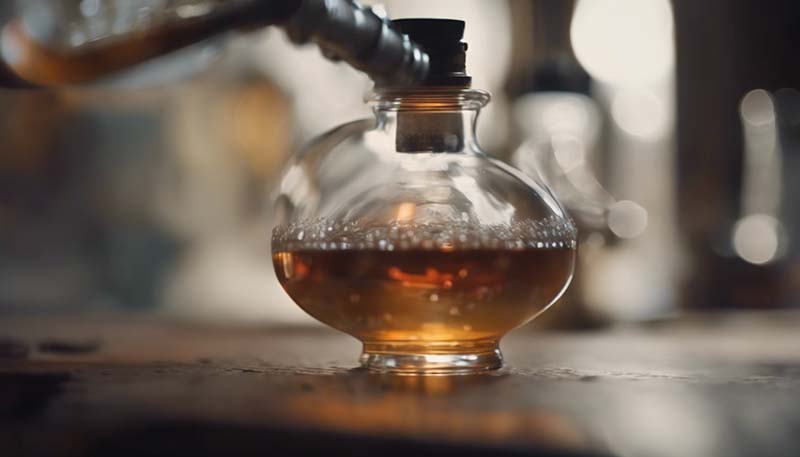
The History and Science of Distillation
Distillation is a process that has been utilized for centuries to separate and purify liquids through differences in their boiling points. This technique has played a crucial role in various industries, including the production of alcoholic beverages, essential oils, and the refinement of chemicals. In this article, we will delve into the history of distillation, explore its scientific principles, and discuss its applications in modern society.1. Historical Overview
The origins of distillation can be traced back to ancient civilizations, with evidence of its use in the production of perfumes and essential oils in ancient Egypt and Greece. However, it was the Arabs who significantly advanced the practice during the 8th to 10th centuries. They developed the process of distilling alcohol, which later paved the way for the production of alcoholic beverages.1.1 Early Developments
The alembic, an early form of the distillation apparatus, was invented by the alchemists of the Islamic Golden Age. This innovation allowed for more efficient separation of components in a mixture, and its design has influenced modern distillation equipment.1.2 Renaissance and Beyond
During the Renaissance, European alchemists and scientists further refined the process, leading to the development of distillation as we know it today. The 16th and 17th centuries saw the widespread use of distillation in the production of spirits like brandy and whiskey.2. The Science Behind Distillation
Distillation is based on the principle of differences in boiling points of substances. The process involves heating a liquid mixture until one of the components reaches its boiling point and turns into vapor. This vapor is then collected and cooled, causing it to condense back into a liquid, effectively separating it from the other components.2.1 Basic Components of a Distillation Apparatus
The essential components of a distillation apparatus include:2.2 Types of Distillation
There are several types of distillation, including:3. Applications of Distillation
Distillation is a versatile technique with a wide range of applications across various industries:4. Modern Innovations and Challenges
While distillation has been a staple in many industries for centuries, modern advancements have led to the development of more efficient and environmentally friendly techniques. However, challenges such as energy consumption and the need for better separation of complex mixtures remain.4.1 Energy Efficiency
Improving the energy efficiency of distillation processes is a significant area of research. This involves optimizing the design of distillation columns, employing heat integration, and exploring alternative energy sources.4.2 Advanced Separation Techniques
The development of advanced separation techniques, such as membrane separation and supercritical fluid extraction, offers new possibilities for the efficient and selective separation of components in mixtures.4.3 Environmental Considerations
Environmental concerns have led to a greater focus on sustainable practices in distillation. This includes the use of renewable energy sources, minimizing waste, and reducing the overall environmental impact of distillation processes.5. Conclusion
Distillation is a fundamental technique that has played a crucial role in the development of modern society. From its historical roots to its current applications and future innovations, the science and technology of distillation continue to evolve, shaping the way we produce and purify a wide range of products.



📅 Jul 24 , 2026
📅 Jul 24 , 2026
📅 Jul 24 , 2026
📅 Jul 24 , 2026
📅 Jul 24 , 2026
📅 Jul 24 , 2026
948 views
1005 views
1113 views
986 views
1726 views